My Nephew Accused Me of Forging My Brother's Will — Until I Opened the Bible He Gave Me
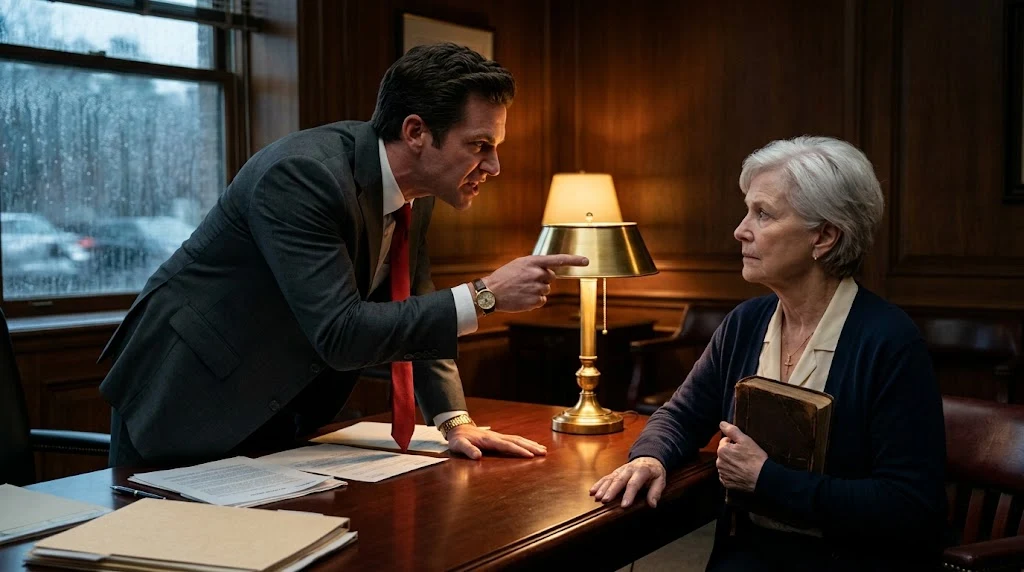
"You forged that will, Aunt Helen!"
My nephew James slammed his palm so hard on the lawyer's mahogany table that the papers jumped. He towered over me in his charcoal suit, finger stabbing toward my chest, and in front of the whole family he called me a thief and a liar. He said I'd stolen his inheritance, his house, everything, by faking my own brother's signature.
I gripped the worn leather Bible William pressed into my hands years ago. I said nothing. What was there to say? He's a lawyer. He knows documents. He knows how to make things look official.
He pulled his own paper from his briefcase and held it high. "This is the only true copy. She's lying."
The room believed him.
My sister-in-law leaned close and whispered, and I felt forty years of quiet devotion—the weekly visits, the care when he was sick—collapse in two minutes. This man had painted me as a grasping old woman desperate for money, and the room nodded along.
James smiled, that practiced lawyer's smile. "Everything—the house, the money—you stole it from my father."
I should have been afraid. And for a moment, I was.
But then William's last words came back to me: "Helen, the best truth stays where you least expect it." And he had pressed that Bible into my hands and made me promise to keep it close.
I opened it slowly. The family went quiet, watching this old woman fumble with a book of psalms. James rolled his eyes.
The page was yellowed at the edges. Typewritten. Dated nine years ago—three years before the will he was brandishing. At the bottom, my brother's unmistakable single letter "W" in blue ink, and a notary stamp a decade old.
I slid it across the table toward the lawyer.
James laughed. "What is that, some old grocery list?"
The lawyer picked it up. He went very, very still.
"I have the page your uncle signed eight years ago," I said, calm, looking at William's lawyer, not at James. "It's dated longer ago than yours."
"You forged that!" James shouted, his voice cracking.
The lawyer turned the page toward the lamp, checking the notary stamp. Then he looked at James's document. Then back at mine.
"James," he said quietly, "this codicil voids your claim. It leaves everything to your aunt Helen. And this notary stamp—" he tapped it— "is nine years old."
James's face drained. His wife grabbed his arm and pulled him toward the door. But the lawyer wasn't finished. He said the forgery would be referred to the district attorney.
James walked out without a word. The door clicked shut.
And I sat there, still holding the Bible, and told the lawyer, "I told my brother I would never need it. He was the one who insisted I keep it."
That man had planned this for years. And he almost got away with it.
Click the link in the comments to read the full story—how I came to hold that page, what James did to get his hands on the real papers, and the final conversation my brother and I had before he died.
Advertisement