The Night Nurse Kept a Sealed Form in Her Pocket for Four Hours Before the Doctor Accused Her
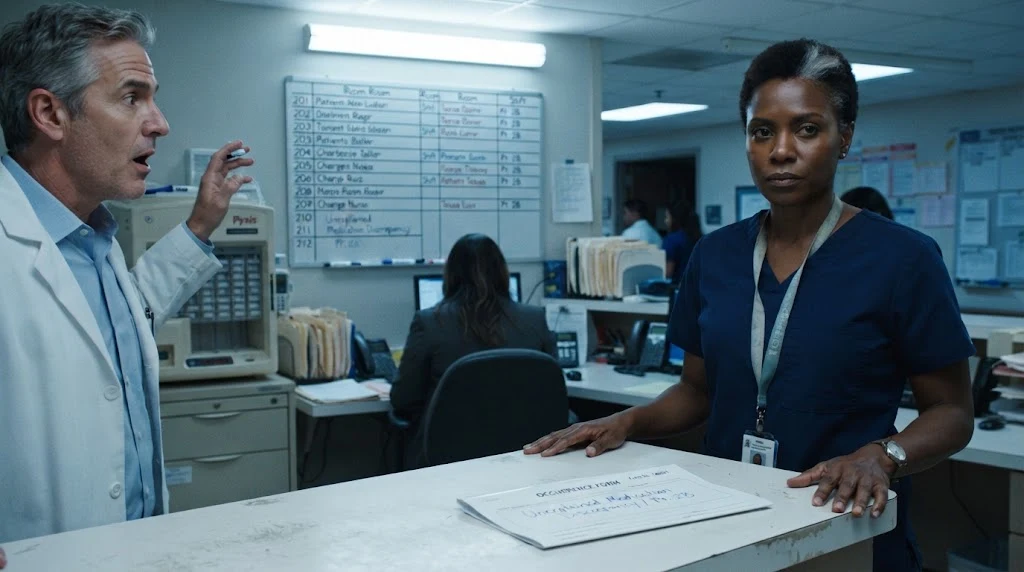
"Whose patient was left in the dark?" Dr. Halloran slammed his palm on the whiteboard tray at 7 a.m. shift change — so hard the dry-erase marker flipped off and rolled across the tile — and pointed at Nadia Adeyemi's name.
Nadia Adeyemi had worked twelve hours on the med-surg floor. One accusation about room 412 and a missed dose ends her license, ten years of night shifts, and the only income her daughter knows.
She kept both hands flat on the counter and said nothing.
Halloran told the unit manager she "cannot be trusted with a med cart." He said it loud enough for the day shift to hear, and they heard.
Then Tessa Ruiz opened the sealed occurrence form Nadia had filed at 3:50 — four hours before anyone accused her.
Halloran laughed. "She wrote it after the fact."
Ruiz ran the UV pen light across the corner of the form. A small blue mark glowed.
It was the same mark Halloran's fountain pen leaves on his own chart notes.
The form carried his order number. His phrase: "clinical window of opportunity."
Behind it, clipped tight, sat his delayed addendum — signed at 6:40, more than four hours after the MAR window closed.
The Pyxis log came up next. Room 412, 2:14 a.m. Not Adeyemi's badge.
The risk manager took the sealed form off the desk and said four words: "This leaves the building."
She walked toward the elevators.
Does the form reach the state board — or does the hospital bury it before anyone signs off? The blog follows it through risk management, the board complaint, and the seat Adeyemi finally takes at the desk. Read it below.
Advertisement